Homes
Lighting designed around waking, working, family life and evening recovery.
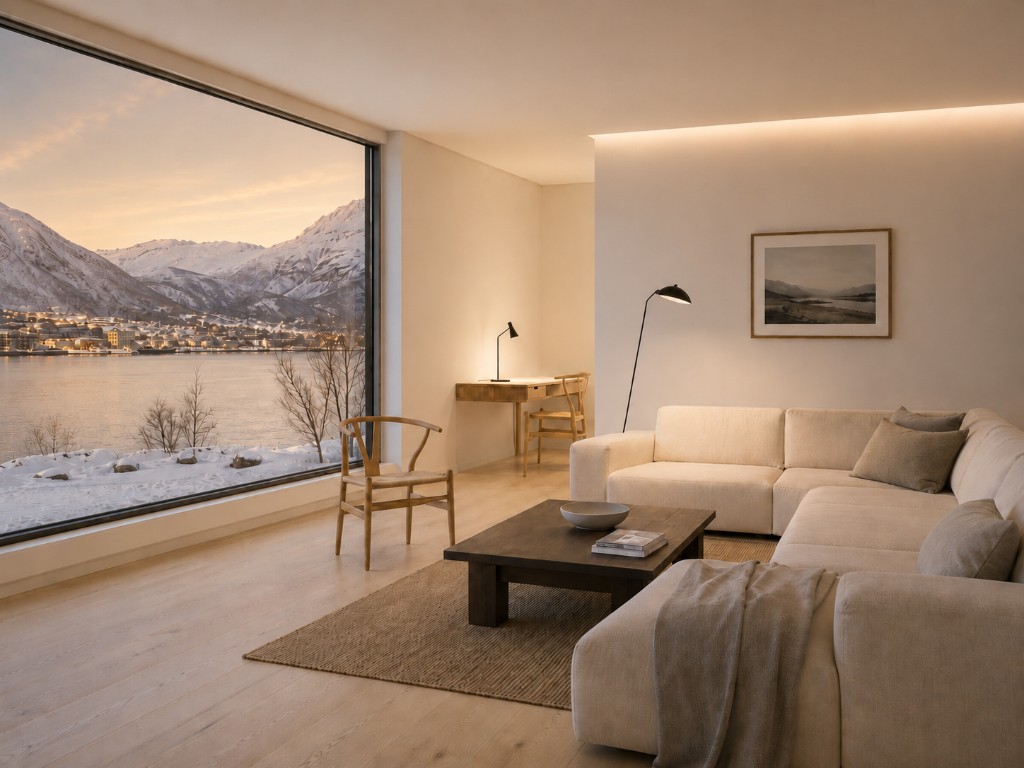
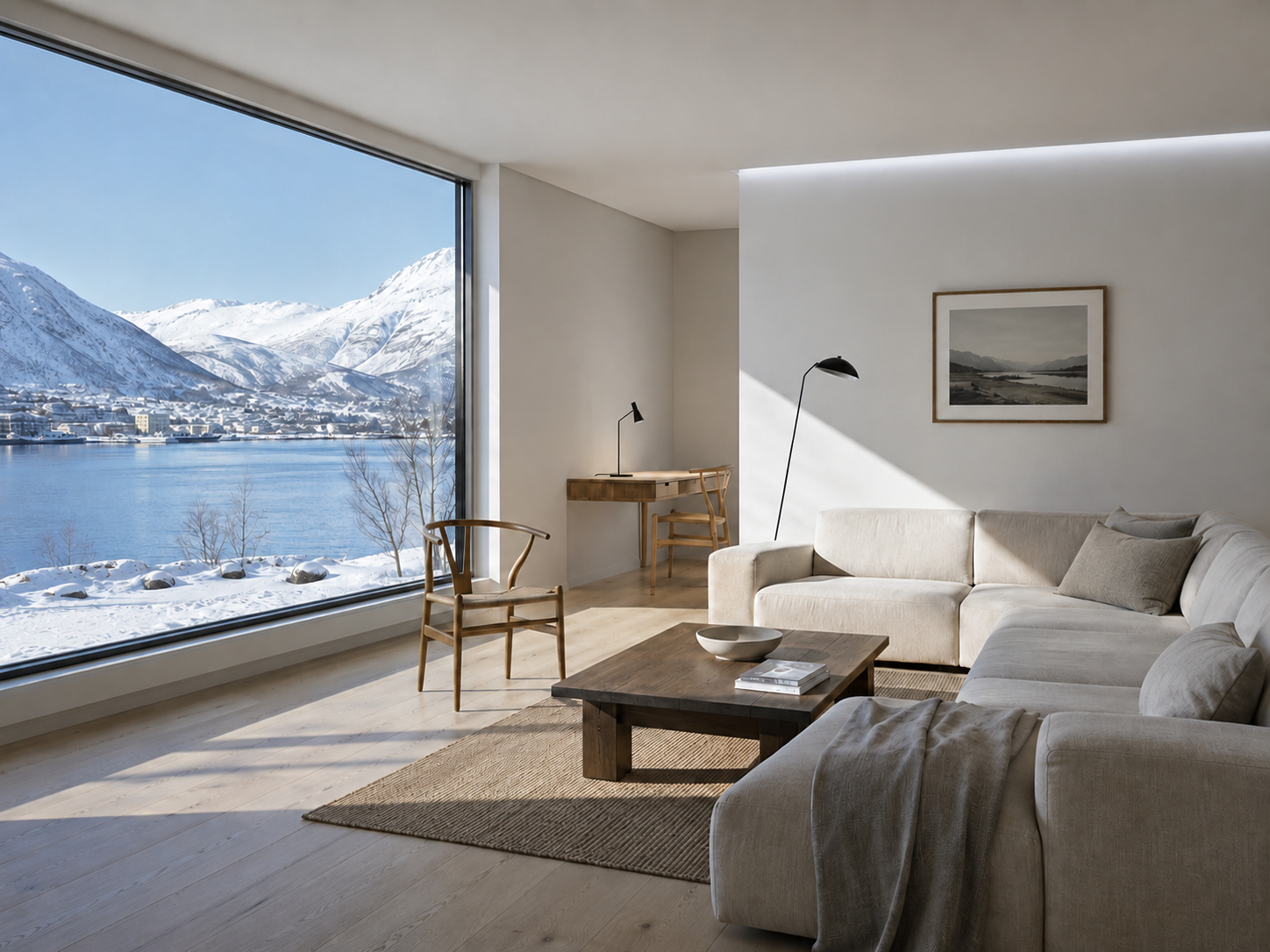
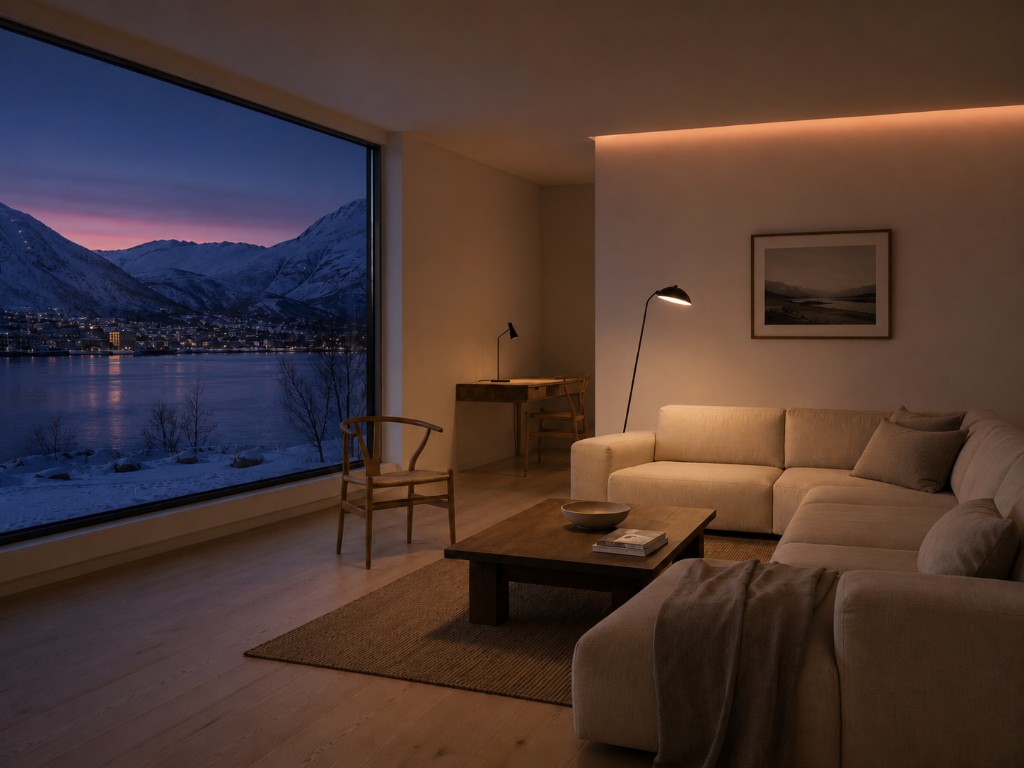
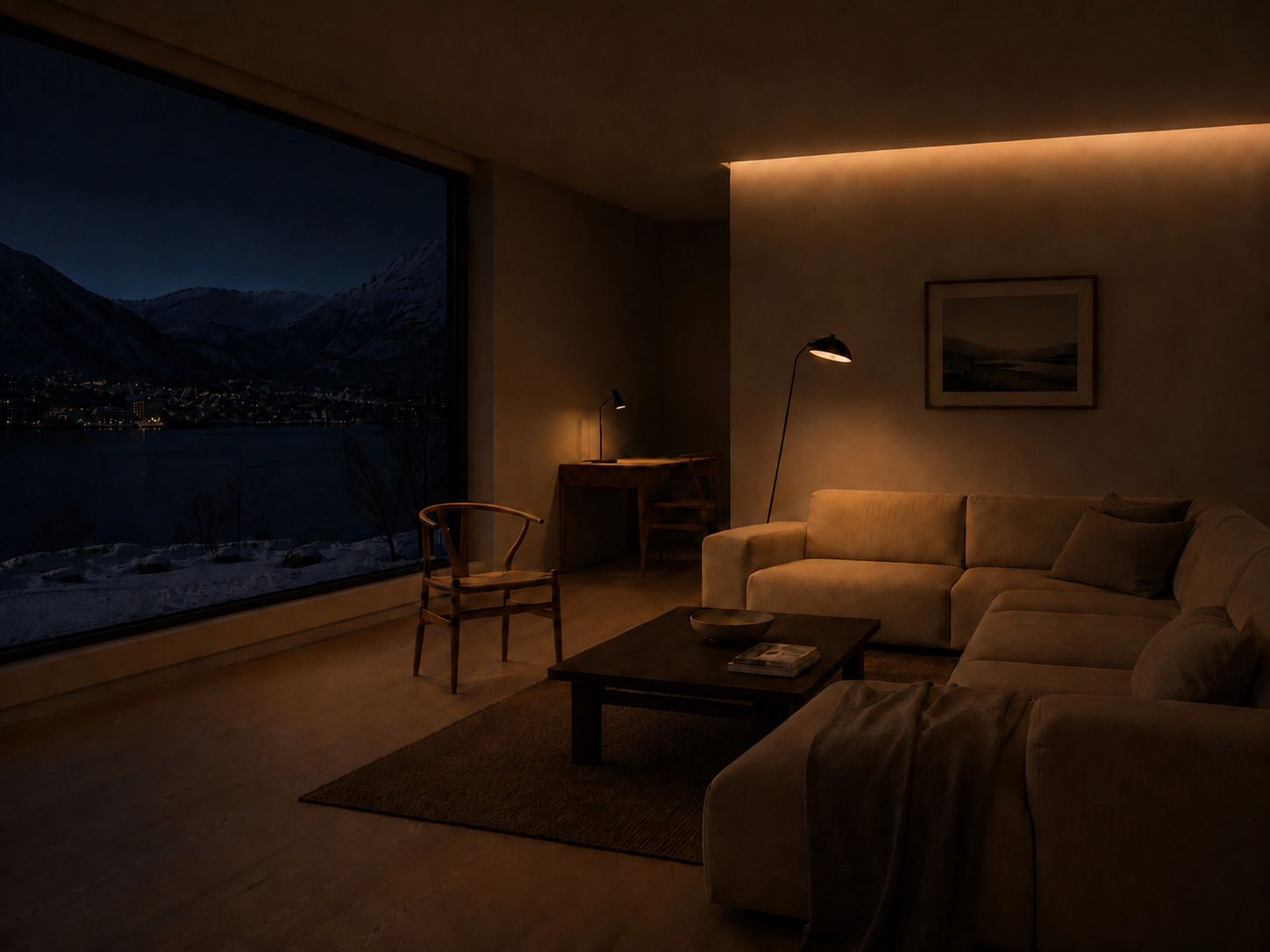
Personalised lighting and home automation systems for better mornings, focused days and calmer evenings — designed for life in the Nordic north.
In northern Norway, daylight varies dramatically across the year. Standard indoor lighting usually stays the same, whether it is a dark winter morning, an afternoon of concentrated work, or the hour before sleep. We design systems that change with the time, activity, season and people using the space.
Timing, intensity, direction and spectrum all matter. Colour temperature alone is not a biologically effective system.
Drag the marker to see how the room changes with the hour.
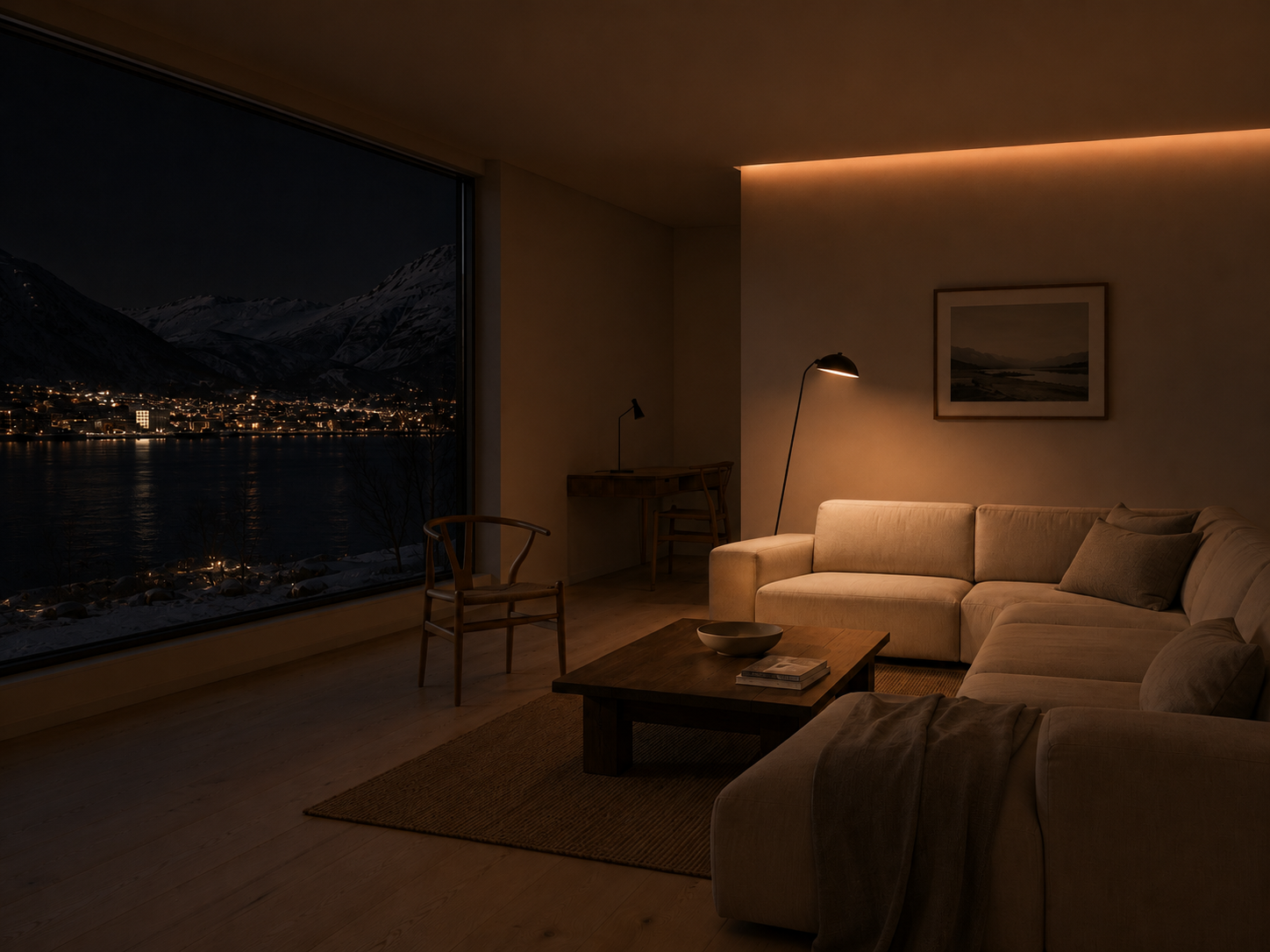
High-quality, appropriately positioned light supports visual comfort and an alert working environment.
We review the household, rooms, schedules, daylight exposure, sleep patterns, activities and existing electrical installation.
We develop lighting scenes and automation around the occupants, architecture and seasonal conditions.
Qualified professionals install the luminaires, controls, sensors and associated electrical components.
We commission the system in the actual rooms, explain its operation, and refine it after real-world use.
Lighting designed around waking, working, family life and evening recovery.
Individually configured work environments for people who depend on sustained concentration.
Dynamic lighting scenes for instruction, independent work, presentations and transitions between activities.
Systems adapted for polar-night conditions, shift patterns and unusual working hours.
We are investigating whether personalised light routines can support sleep, comfort and daily functioning across different phases of women's lives. This is a research pilot, not a medical claim.
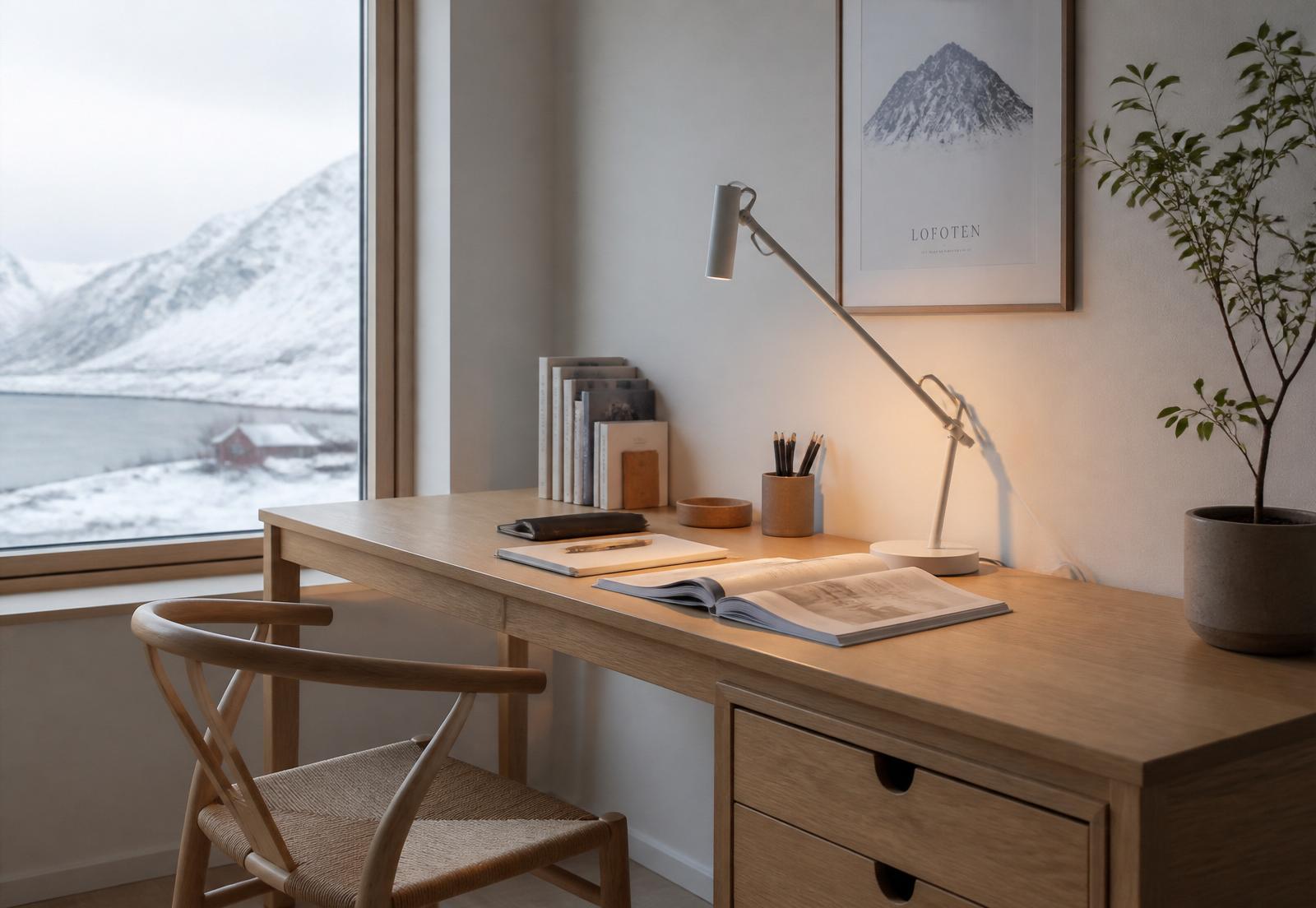
The final system may combine existing compatible equipment with new luminaires, sensors and controls. We choose components according to the property, budget, installation requirements and required light performance.
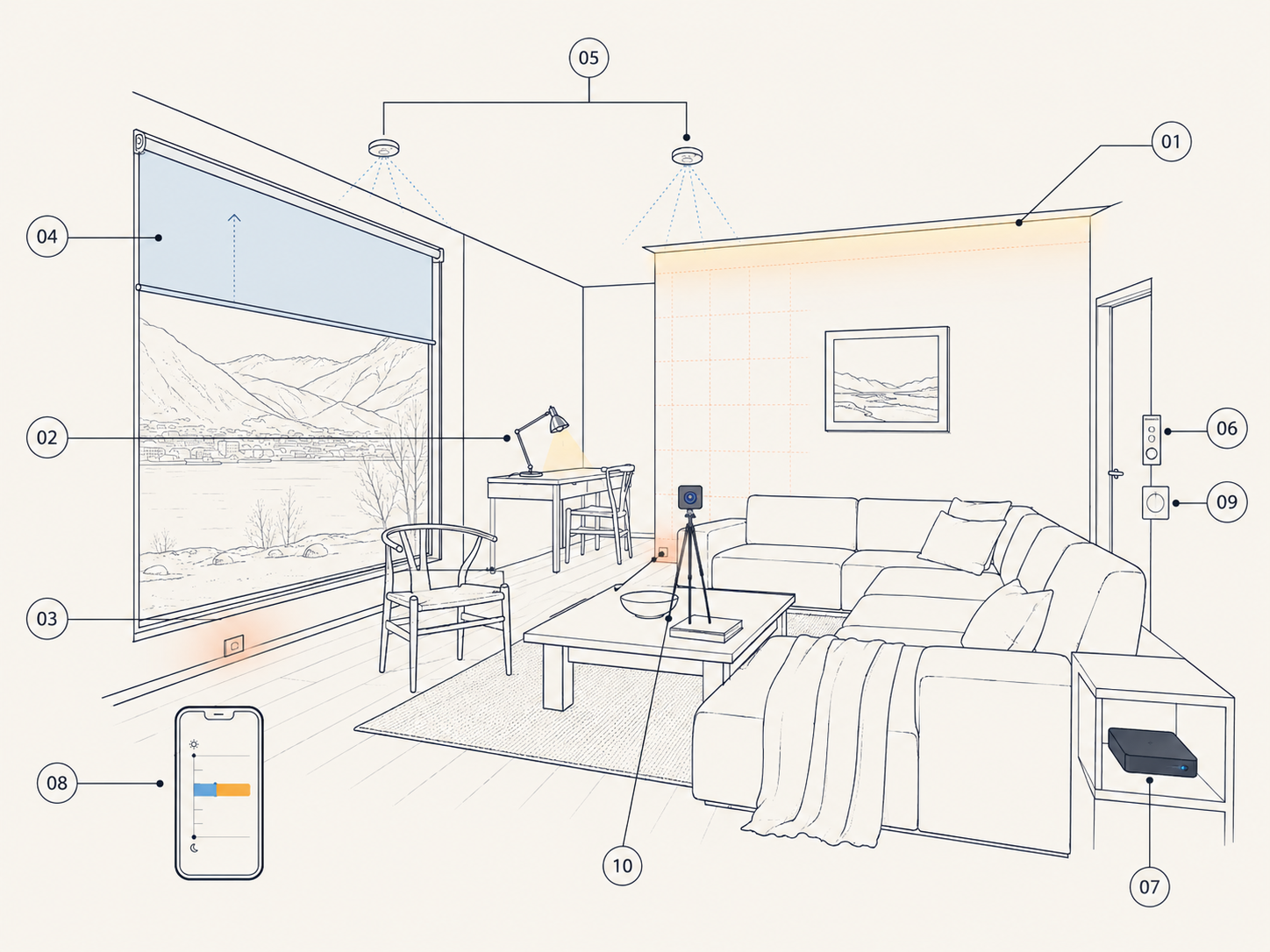
Inputs we use when designing your system:
We measure what actually reaches the occupant, not just what leaves the fixture.
We distinguish between established lighting principles, promising research, outcomes still being studied, and what Solacera actually measures.
Read our Science & Standards noteEvaluation of one home or working environment, measurements and written recommendations.
Email us to bookDesign, equipment, installation and commissioning for one priority room.
Email us to bookIntegrated design and automation across principal living, working and sleeping areas.
Email us to bookFinal pricing depends on the property, electrical installation, selected luminaires and degree of automation. You receive a fixed proposal before installation begins.
Yes. Every scene and schedule has a manual override at the wall control and in the app. Automation is optional at every level.
Yes. Luminaires, sensors and the control unit belong to you after installation. No subscription is required for the system to run.
A single room typically takes one to three days on site after design is agreed. Whole-home projects are planned in stages.
Sometimes. During the assessment we test compatibility and only replace what is required to reach the design intent.
Sensor data stays on your local control unit by default. Any cloud services are opt-in and named in your proposal.
Two years on installation work, plus the manufacturer warranty on each component. We commission and re-calibrate within the first year.
A short visit to your home or workplace. We measure the rooms, discuss how you actually live in them, and follow up with a written recommendation.
Email us to book